
Showing posts with label Flock Tender Certificate. Show all posts
Showing posts with label Flock Tender Certificate. Show all posts
1/18/10
Hamburg (My other new chicken!)
"Hamburg Chickens are a very old race of domesticated poultry. The name of the breed is German, but the origin is Dutch. Hamburg Chickens owe their present shape and color qualities to the British fanciers, who, over a century ago, began the work of refining the 'pheasant fowls' of that period into modern Hamburgs. The Spangled type, was kept in Yorkshire and Lancashire three hundred years ago. Also a breed called Black Pheasants was mentioned in a book of 1702. The name Moonies originates from the Moon shape spangles on the feathers. There is mention of them in Thomas Hardy's book 'Tess of the D'urbavilles' The Black and Spangled varieties were evolved in England; the Penciled varieties came from Holland via Hamburg, Germany."


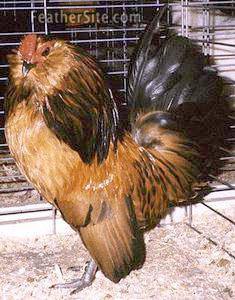
Belgium D'anvers (One of my new birds)
"One of the true bantams, meaning there is no standard bird of the same type, these little bearded birds have been bred for exhibition for many years in Britain and on the Continent. They are found in many colors, including Black, Mottled, Porcelain, Self Blue and Quail. They are delightfully pretty little birds although in my experience the males are often aggressive to people. On the other hand, the hens are very friendly and make wonderful pets." feathersite.com

1/4/10
Mandarin Duck - Flock Tender Certificate

"The Mandarin Duck (Aix galericulata), or just Mandarin, is a medium-sized perching duck, closely related to the North American Wood Duck. It is 41–49 cm long with a 65–75 cm wingspan.The adult male is a striking and unmistakable bird. It has a red bill, large white crescent above the eye and reddish face and "whiskers". The breast is purple with two vertical white bars, and the flanks ruddy, with two orange "sails" at the back. The female is similar to female Wood Duck, with a white eye-ring and stripe running back from the eye, but is paler below, has a small white flank stripe, and a pale tip to its bill.Mandarin Ducks, which are referred to by the Chinese as Yuan-yang (simplified Chinese: 鸳鸯; traditional Chinese: 鴛鴦; pinyin: yuān yāng)" - From Wikipedia
"This beautiful little Asian duck is fairly easy to keep in captivity. A cavity nester like its relative the Wood Duck, it prefers to nest off the ground in a hole in a tree or similar situation. An average clutch is 8 eggs and the incubation period is 29 days. In breeding plumage the male is unmistakeable for any other species, with the conspicuous orange "sails" on his back. Excellent fliers, these birds must either be pinioned or kept in covered aviaries." - from feathersite.com
Japanese Hen

From Murry McMurray
"The history of these can be traced back to Japanese paintings over 300 years old. These bantams carry their tails upward and higher than the head. The wings angle down and back along the sides. Good layers, nice for show, and very popular. Because of a genetic characteristic in Japanese bantams there is no such thing as a pure short legged Japanese. You may experience some chicks with medium to long legs. With white feathers over their entire body and the red comb and face, and the typical Japanese style, these bantams look like they own the farm as they strut around."
My hen is little and full of energy. She started laying little white eggs around 11 weeks old and even in this really cold weather has continued. She is quite active bur very very friendly. I would really recommend you get Japanese hens.
12/30/09
Brahma

I have 3 brahmas 2 bantams and a full sized hen. The full sized hen is big, bossy and very social. One of the bantams, who is a buff brahma is not very nice to other birds. The little white brahma is almost a replica of the full sized white brahma except about 5 times smaller and her name is Susan. Brahma's are some of my favorite breeds with their amazing plumage and hilarious personality.
When I arrive at the barn the big white brahama always comes to greet me. She is the one who leads the hen house. Her name is Paprika.
12/18/09
White Crested Black Polish

For my APA Flock Tender Certificate I have to do a report on each breed in my flock. The second are Polish Hens.
I have two Polish hens. Both are white crested black polish. You can see these types in these pictures. In England these birds are known just as Polands. They are one of the most popular crested breeds. Their distinctive feature is a big mop or crest of feathers on the top of their head. Some describe it like and umbrella on their head, my mom thinks the birds look like Coco Channel.

These birds lay a white eggs, come in many color variations and may also be bearded or unbearded. Hens tend to weigh about 4.5 pounds. On average the first few years they may lay as many as 300 eggs.
Polish hens tend to move quickly and with sharp movements, this is in part because they can't see very well with their crest dangling in from of their eyes.
Jan Brett is a great person who knows a ton about Polish
12/16/09
Blue Cochins

this is one of my hens as a chick
For my APA Flock Tender Certificate I have to do a report on each breed in my flock. The first are Blue Cochins.
Background:
"Cochins came to the US and England for the first time in about 1845, when they were known as Chinese Shanghai fowl. The first ones were a buff color and their size and thick soft feathering created quite a sensation, especially in England. The American Poultry Association recognizes Buff, Partridge, White, Black, Silver-laced, Golden-laced, Blue, Brown and Barred varieties.
One of the largest chickens, a full grown cock can reach 11 pounds, with the hens reaching 8 1/2 pounds. With their thick fluffy plumage, the birds look even larger. Their skin is yellow and they lay a brown egg. Although bred mostly for exhibition, they make a good meat bird. Cochins are usually very calm birds and easily made into pets. They are also excellent broodies. " from Feathersite.com
My birds:
I have 4 hens. They are very easy to identify because they are completly covered in feathers from head to toe. Yes the feathers even cover the leg and foot. My blue cochin skin color is a pale yellow and they lay light brown eggs. All of my birds are very very social and chill birds. They aren't skittish or wild but quite social. The average weight for a cochin hen is about 8-9 pounds. I think my hens weigh about 10! Cochins are known to be good mothers. Mine have often gone broody for long periods of time and the only way to get them out of this cycle is to not allow them into their nesting box for a day. The problem when they go broody and the eggs aren't going to hatch is they lose weight.
Subscribe to:
Posts (Atom)